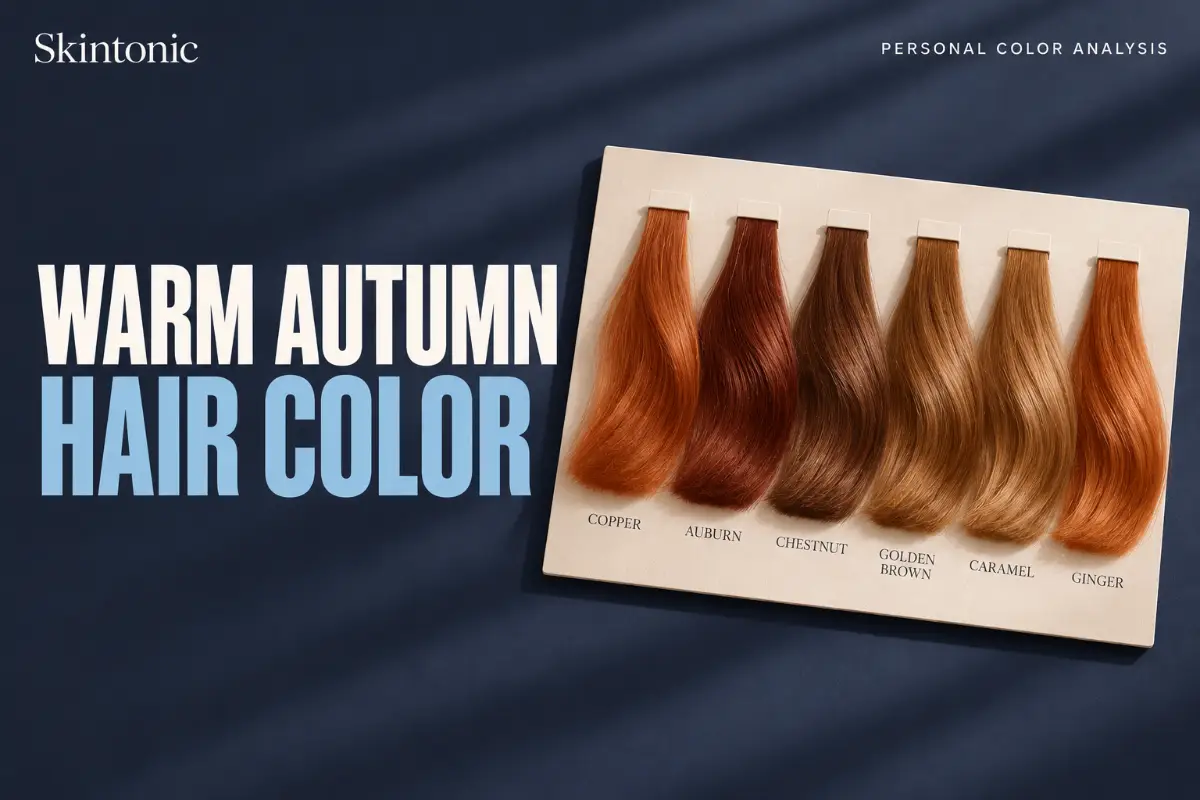
If you’re a Warm Autumn, the hair colors that tend to look best on you are rich, golden and slightly earthy: think copper, auburn, chestnut and golden brown. These shades echo the warmth already in your skin and eyes, so your face looks clearer and more awake rather than washed out or harsh.
The ones to be careful with are icy, ashy or blue-toned shades, such as platinum, ash blonde and blue-black. They often fight your natural warmth and can make skin look sallow or tired. Below is how to pick the right warm shade for your depth, how to keep it from fading, and what to do if you’re going gray.
Who is a Warm Autumn?
Warm Autumn (sometimes called True Autumn) is the warmest of the three autumn seasons. Its defining trait is warmth: golden, peachy, olive-gold or bronze undertones, with medium depth and a soft rather than icy finish. You can be a Warm Autumn with fair, medium, olive, brown or deep skin. What matters is the overall warm, rich impression, not how light or dark you are.
Common traits include:
- Skin: golden, bronze or warm olive, often looking best with a bit of glow rather than pink or rosy tones.
- Natural hair: auburn, red, copper, golden brown, warm medium-to-dark brown, or brown-black with warm glints in sunlight.
- Eyes: hazel, amber, warm brown, olive green or topaz, often with golden flecks.
If you’re not sure about your undertone, start with the undertone test, then read the full Warm Autumn season guide.
The best hair colors for Warm Autumn
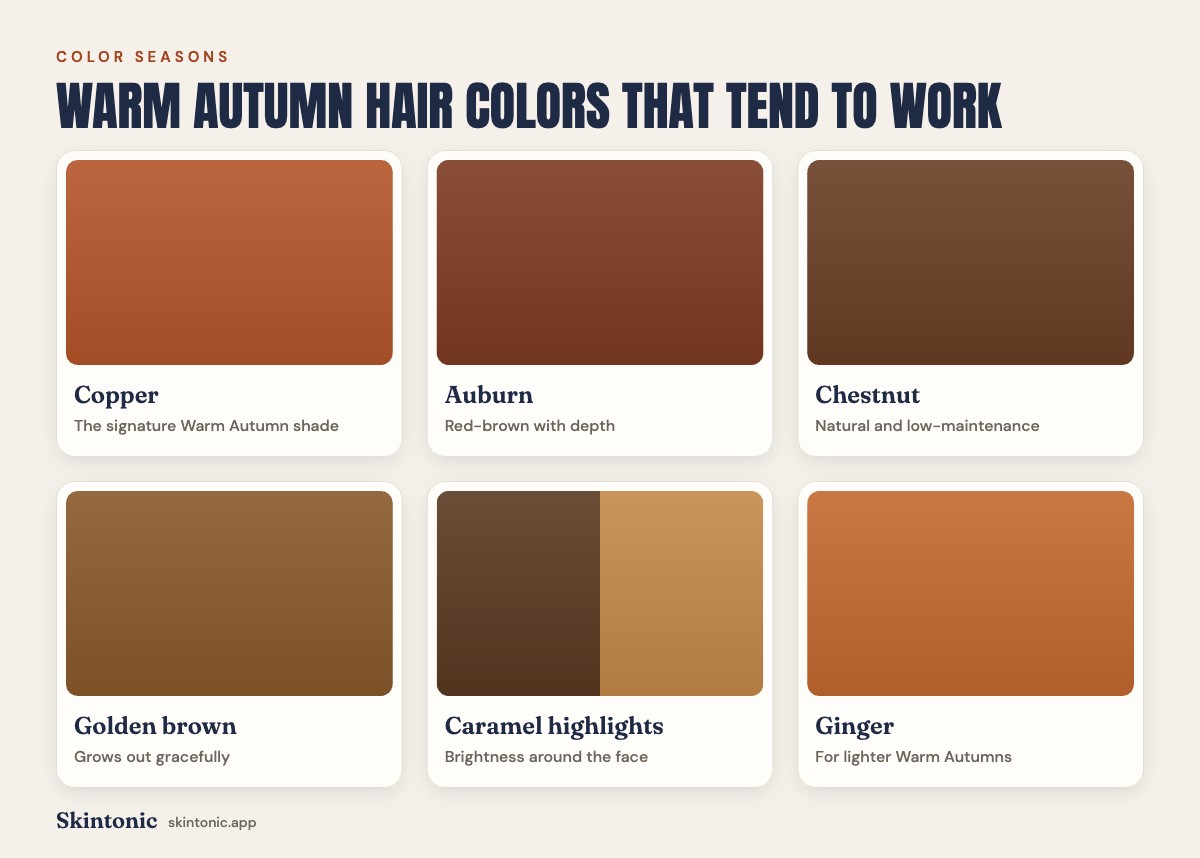
The goal is hair that looks like it has light coming from inside it: warm, dimensional and rich, never flat or grayish. These shades tend to work well:
Copper
Copper is often the signature Warm Autumn hair color. It sits between red and gold, and on warm skin it can make the eyes look brighter, especially green, hazel and amber eyes. If you’re nervous about committing, a copper gloss over your natural brown gives a warm sheen without a dramatic change.
Auburn
Auburn is a red-brown with depth, and it tends to suit Warm Autumns with medium-to-deep coloring. Choose an auburn that leans brown and golden rather than purple or wine-toned. Violet-based reds can look stark next to golden skin.
Chestnut and golden brown
If you want something natural and low-maintenance, chestnut and golden brown are reliable choices. They suit almost every Warm Autumn and grow out gracefully. They also work well for short cuts, fades and beards, where a strong red might look less natural.
Caramel and honey highlights
Rather than going lighter all over, many Warm Autumns look best with warm brown as a base and caramel or honey pieces added around the face. This adds brightness without the yellow-white look of very pale blonde. On long hair, soft balayage keeps it blended; on short hair, a few fine highlights near the crown and front are enough.
Ginger (for lighter Warm Autumns)
If your natural coloring is on the lighter side, a rich ginger can look lovely. Keep it golden rather than pinky. If it starts to look like a cool strawberry blonde, it may be drifting toward a spring palette.
Matching the shade to your depth
Warm Autumn covers a range of skin tones and natural hair depths, so the “best” shade depends on where you start. As a rule of thumb, staying within two levels of your natural color tends to look the most harmonious.
| Your natural coloring | Shades that tend to work | Go easy on |
|---|---|---|
| Fair to light-medium skin, light brown or red hair | Ginger, copper, golden brown with honey pieces | Very dark brown all over, which can look heavy |
| Medium or olive skin, medium brown hair | Chestnut, copper, auburn, caramel highlights | Ash browns, which can make olive skin look gray |
| Brown or deep skin, dark brown or brown-black hair | Auburn, deep chestnut, copper or caramel accents on a dark base | Blue-black, which can look flat against warm skin |
Our guides for colors for red hair and olive skin go into more detail on these combinations for clothing, which often follows the same logic.
Hair colors Warm Autumns usually avoid
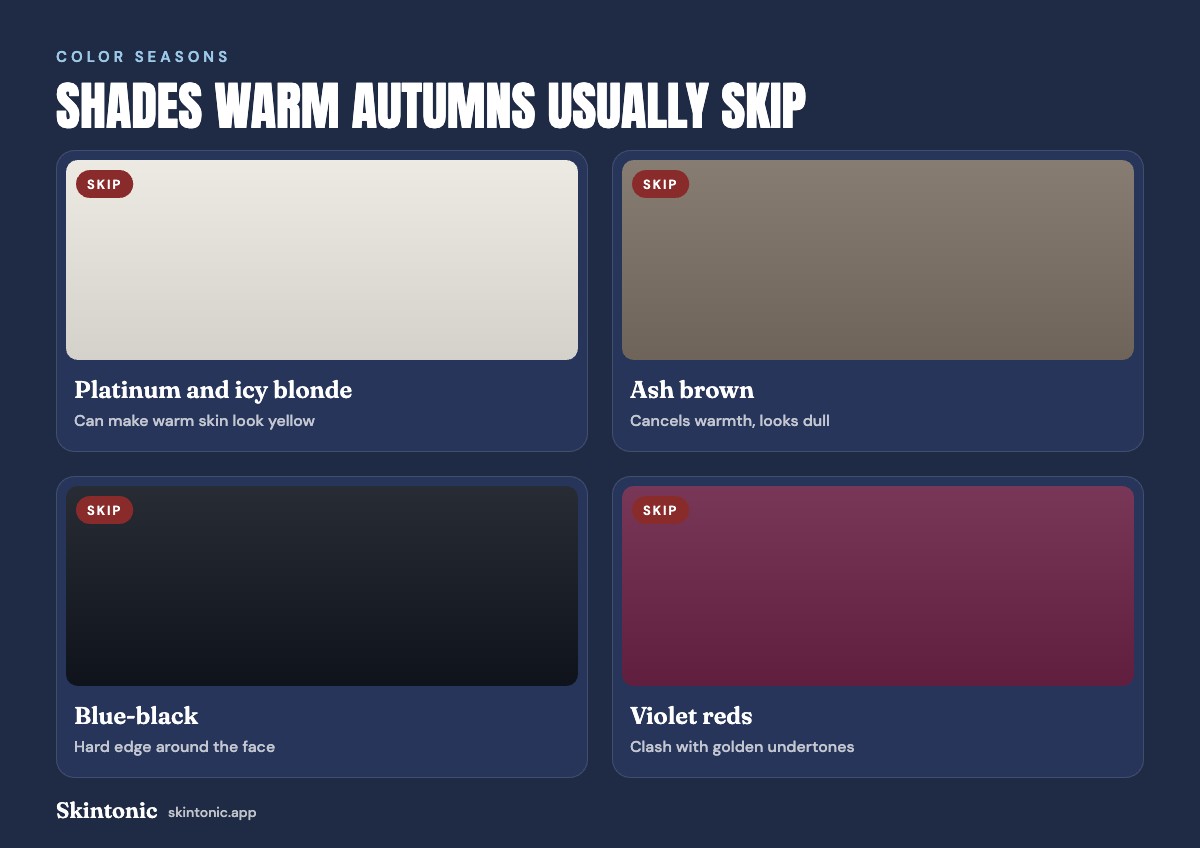
- Platinum and icy blonde: very pale, cool blonde often makes warm skin look yellow and can drain color from the lips.
- Ash brown and ash blonde: the gray-green base cancels warmth, which can make the face look dull. This is one of the most common reasons people feel their hair color makes them look tired.
- Blue-black: it creates a hard edge around the face. A soft, warm dark brown usually looks richer.
- Cool burgundy and violet reds: these belong more to winter palettes and can clash with golden undertones.
None of this is a strict rule. If you love a shade, you can still wear it; you may simply find your clothing and makeup have to work harder around it.
How to ask for it at the salon
- Use the word “warm” and mean it. Say you want golden or copper tones and no ash. Many toners are cool by default, especially after lightening.
- Bring daylight photos of your own face. Pictures of your natural hair in sunlight show your colorist where your warmth already lives.
- Check the result in daylight. Salon lighting can make shades look warmer or cooler than they are. Step near a window before you leave.
- Ask about a gloss for upkeep. Copper and red fade fastest. A warm gloss every few weeks keeps the shade from turning brassy-orange or dull.
Eyebrows, beards and facial hair
If you color your hair, think about the hair around your face too. Brows that are a shade or two softer than your new hair, in a warm brown, usually look most natural. If you have a beard or stubble, it often already has red or golden glints that suit a copper or chestnut head of hair, so you rarely need to dye it to match.
Going gray as a Warm Autumn
Gray hair is cool by nature, so Warm Autumns sometimes feel it takes the life out of their face. You have a few options:
- Blend it: golden or caramel lowlights make the transition softer.
- Embrace it with warm styling: a soft, creamy silver (rather than a stark blue-white) can work, especially paired with warm clothing near the face.
- Adjust your wardrobe: as hair lightens, your overall contrast often drops, so slightly softer colors may suit you. Our page on colors for gray hair covers this.
Often confused with
Warm Autumn sits between two neighbours. Deep Autumn has more depth and contrast, and tends to suit darker hair like deep chestnut and espresso. Soft Autumn is more muted and blended, so very vivid copper can look too strong there. If you’re torn between them, the season comparison page lays out the differences side by side.
If you’re still not sure you’re a Warm Autumn, Skintonic can suggest your color season from one selfie, with a free preview before you decide whether you want the full palette.
Quick recap
- Warm Autumns tend to look best in rich, golden hair colors: copper, auburn, chestnut and golden brown.
- Caramel and honey highlights add brightness without the harshness of pale blonde.
- Stay within about two levels of your natural color for the most natural result.
- Ash tones, platinum, blue-black and violet reds often clash with warm undertones.
- Ask your colorist for “warm, no ash,” check the result in daylight, and use a gloss to keep copper and red from fading.
- Neighbouring seasons are Deep Autumn (deeper) and Soft Autumn (more muted).